Russia's VPN Crackdown Is Starting to Hurt Online Shopping
Russia's 2026 campaign against VPNs and foreign platforms is breaking more than access to news. It is snagging the checkout flows, fraud checks, and cross-border access online retail depends on.
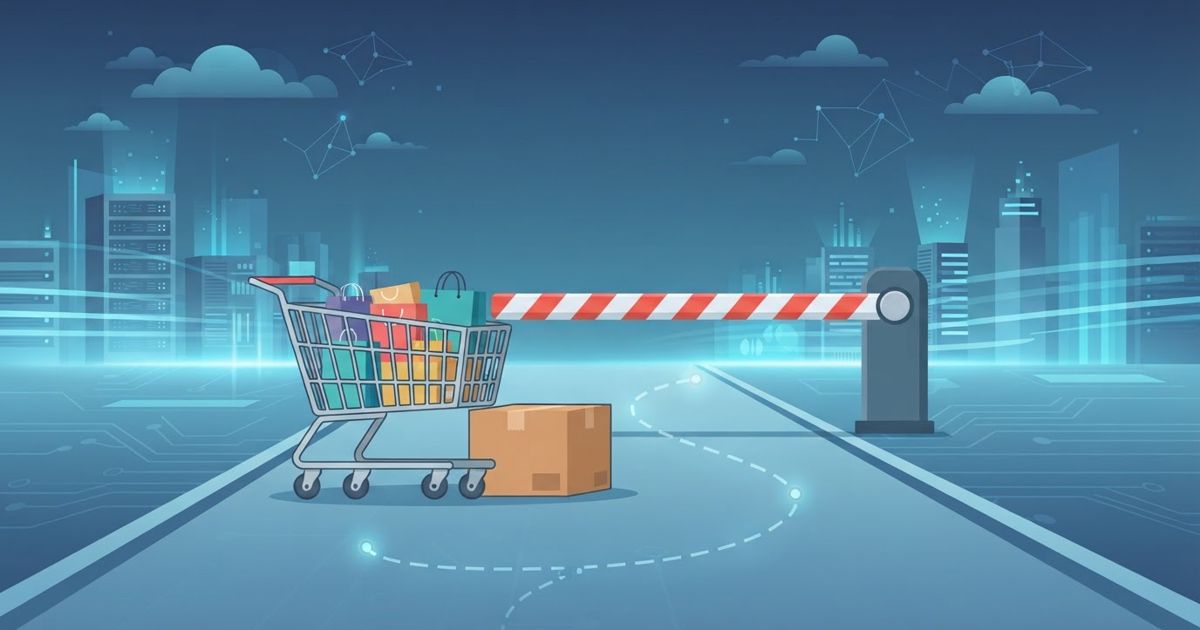
Table of contents
When a government blocks VPNs, the obvious casualty is access to news, messaging, and social media. A quieter casualty is commerce. Russia's 2026 internet crackdown — a sweeping campaign against VPNs and foreign platforms — is showing how blocking the tools people use to route around censorship can also break the unglamorous machinery of online shopping: checkout flows, fraud checks, customer trust, and the cross-border access that retail depends on. The lesson travels well beyond Russia.
What Russia Has Actually Done
The scale is documented. In February 2026, Russia's communications regulator Roskomnadzor confirmed it had blocked 469 VPN services. Around the same period it moved against messaging apps, with restrictions on Telegram beginning in early February and a WhatsApp block following days later, building on voice-call blocking that started in August 2025. The Digital Development Ministry went further, urging providers to charge customers extra for VPN traffic and ordering major online platforms to block users who have a VPN enabled by 15 April 2026, according to reporting from outlets including The Moscow Times and Meduza.
Two structural pieces sit underneath this. A "whitelist" system, introduced in September 2025 as a registry of "socially significant services," is designed so that only state-approved services keep working during shutdowns. And a state messenger, MAX, has been pushed as the domestic alternative — reaching tens of millions of users but, by its own design, lacking end-to-end encryption and cooperating with security services.
Where Online Shopping Breaks
The retail damage is mostly a side effect, and that is exactly why it is instructive. Blocking circumvention tools rarely fails cleanly; it collides with the systems commerce quietly relies on.
Checkout and payment plumbing
The most striking evidence came from Russia's own infrastructure. Per reporting on the April 2026 measures, the VPN crackdown intended to prevent circumvention triggered failures in domestic payment systems, disrupting services including the Moscow metro. The mechanism is general: payment processing, anti-fraud, and authentication calls travel between many third-party systems, and aggressive network filtering aimed at VPNs catches legitimate machine-to-machine traffic in the same net. When those calls time out, the visible symptom is a checkout that spins, declines, or dies on the final step — the single most conversion-sensitive moment in any store.
Anti-fraud false positives
Retail fraud systems score the IP address, geolocation, and network reputation of every order. When a shopper's connection is forced through unusual routing — or when a store is pressured to block anyone appearing to use a VPN — legitimate buyers get scored as risky and their orders are held or declined. Ordering platforms to block VPN-flagged users, as Russia has done, hands every retailer a blunt instrument that inevitably rejects real customers along with the ones it targets.
Access to foreign stores and services
Much cross-border shopping, account login, and post-sale support runs through platforms now degraded or blocked. When the workaround (a VPN) is itself blocked, the path to international sellers, marketplaces, and the services that underpin them narrows. Demand does not vanish; it gets harder, slower, and pushed toward grey channels.
Why This Is a Conversion and Trust Story, Not Just Censorship
Retail runs on confidence and friction. Every extra step, every unexplained decline, every "this service is unavailable in your region" message is a reason a basket is abandoned. A crackdown that makes connections unpredictable attacks both: it raises friction (failed payments, blocked logins) and erodes trust (shoppers no longer sure a checkout will complete, or whether their data is routed through a state-monitored alternative). For merchants, the cost is measured in abandoned carts and lost lifetime value; for shoppers, in a slow narrowing of choice.
It also reveals an awkward truth about VPNs in commerce. Plenty of legitimate retail traffic already travels through VPNs — remote workers, travellers, privacy-conscious buyers, and businesses on corporate tunnels. Treating "VPN detected" as "fraud" or "circumvention" mislabels a large slice of ordinary customers. The Russian approach is the extreme version of a mistake retailers make in milder forms worldwide.
The Honest Caveats
A few things are worth stating plainly. First, a VPN is a privacy-and-access tool; it does not make a payment more secure, and it does not protect a shopper from stolen passwords or infostealer malware — separate threats that no amount of tunnelling fixes. Second, the retail disruption here is largely collateral, not the goal; the precise, store-by-store impact is hard to quantify from outside and varies by sector and payment provider. And third, this is a fast-moving situation: figures such as the count of blocked VPNs and the reach of MAX are point-in-time and will change. The durable insight is structural — broad network blocking and commerce share the same pipes.
What It Means Elsewhere
For readers outside Russia, the value is the pattern, not the geography. As more countries experiment with VPN restrictions and platform blocks, expect the same second-order effects: flaky cross-border checkout, more aggressive fraud false-positives against VPN users, and pressure on merchants to treat privacy tools as threats. For shoppers who use a VPN for entirely legitimate reasons, that means occasional friction — and a reason to understand what a VPN does and does not do for you online.
What does a VPN actually hide?
FAQ
Did Russia ban VPNs entirely?
Not as a single blanket law, but the practical effect is close: Roskomnadzor confirmed blocking 469 VPN services in February 2026 and ordered major platforms to block VPN-enabled users, alongside throttling and provider-level pressure.
How does blocking VPNs hurt online shopping?
Mostly as a side effect. Aggressive filtering aimed at VPNs disrupts the machine-to-machine traffic behind payments and anti-fraud, causing failed checkouts; reporting tied the April 2026 measures to failures in domestic payment systems. It also flags legitimate buyers as risky.
Does a VPN make my online payments safer?
No. A VPN protects privacy in transit and your IP location, but it does not secure a payment, and it does not protect you from stolen passwords or infostealer malware. Those need 2FA, a password manager, and anti-malware.
Is this only a Russia problem?
The scale is, but the pattern is not. Any jurisdiction that broadly blocks VPNs and platforms risks the same collateral damage to checkout, fraud scoring, and cross-border retail access.
Bottom Line
Russia's VPN crackdown was built to control information, but it is also quietly degrading commerce — breaking payment plumbing, mislabelling real shoppers as fraud, and cutting access to foreign stores. The retail damage is collateral, hard to measure precisely, and still unfolding, but the structural lesson is clear: you cannot blunt-force the tools people use to route around censorship without snagging the connections online shopping runs on. Wherever VPN restrictions spread next, expect the checkout button to feel it too.
Sources and further reading
Sources
- The Moscow Times: Russian websites begin blocking VPN users as internet controls tighten themoscowtimes.com
- Meduza: Russia's internet regulator bans site that tracks which VPNs still work meduza.io
- Human Rights Watch: Russia — Digital Iron Curtain Falls on Internet Freedom Protection Day hrw.org