Post-Quantum VPN Encryption: What It Means and Which Providers Are Moving First
Quantum-safe is the newest VPN buzzword. We explain the NIST 2024 standards, the harvest-now-decrypt-later threat, and how to tell a genuine hybrid post-quantum upgrade from marketing hype.
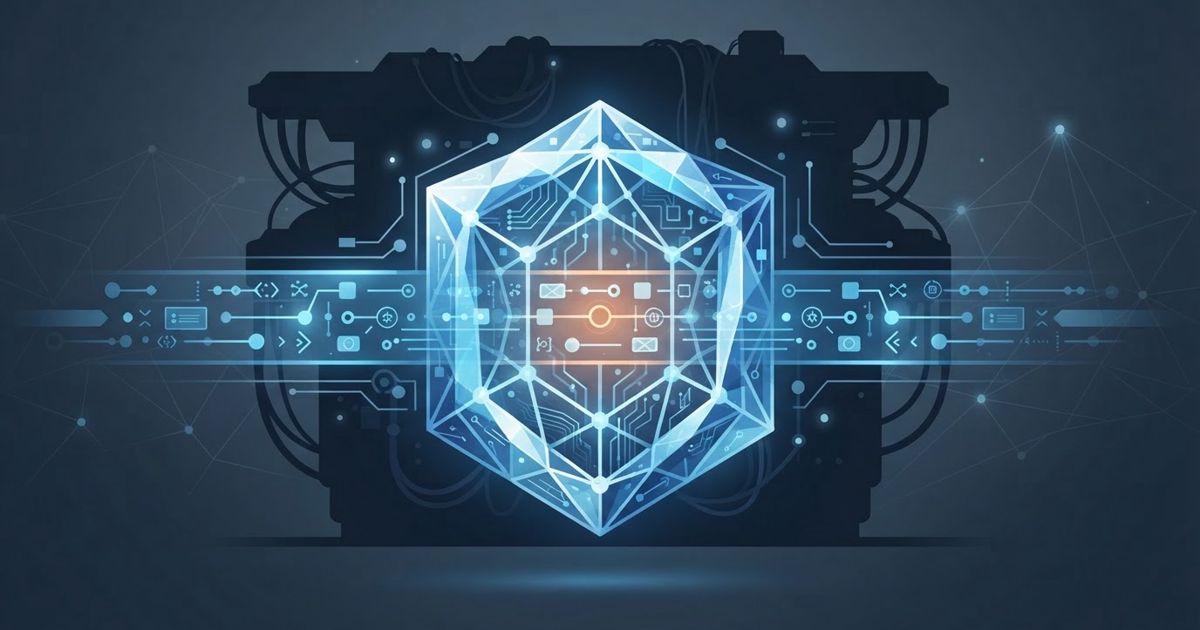
Table of contents
"Quantum-safe" has become one of the newest badges on VPN marketing pages, and like most security buzzwords it sits somewhere between a genuine advance and a sticker. The underlying concern is real: a sufficiently powerful quantum computer could one day break the public-key cryptography that protects today's encrypted connections. The hype is in how some providers describe it. This article explains what post-quantum VPN encryption actually protects against, what the marketing leaves out, and how to read a provider's claims without getting spun.
The threat: "harvest now, decrypt later"
Today's VPNs and the wider internet rely on public-key algorithms like RSA and elliptic-curve cryptography to set up encrypted sessions. These are considered safe against ordinary computers but are theoretically breakable by a large, fault-tolerant quantum computer — which does not yet exist at the required scale.
The catch is "harvest now, decrypt later." An adversary with the resources to record encrypted traffic can store it today and decrypt it years from now, once quantum hardware matures. For most casual browsing this is irrelevant, but for data that must stay secret for a decade or more, the clock is already running. That is why migration is being treated as urgent even before capable quantum computers arrive.
What actually changed: the NIST standards
This is not pure speculation. In August 2024, the US National Institute of Standards and Technology (NIST) finalised its first post-quantum cryptography standards: ML-KEM (FIPS 203), a key-encapsulation mechanism derived from the algorithm known as Kyber, plus the signature standards ML-DSA (FIPS 204) and SLH-DSA (FIPS 205). ML-KEM is the one most relevant to VPNs, because the vulnerable part of a connection is the key exchange — the moment two parties agree on a shared secret. Replacing or reinforcing that step with a quantum-resistant mechanism is the core of "post-quantum VPN encryption."
How providers are actually implementing it
The credible approach is hybrid key exchange: combine a traditional algorithm (such as an elliptic-curve exchange) with a post-quantum mechanism like ML-KEM, so the connection stays secure as long as either one holds. This mirrors how major platforms rolled out the change — Google ran hybrid post-quantum TLS experiments, and Apple introduced its PQ3 protocol for iMessage in early 2024. A VPN doing this properly is hardening the handshake, not replacing the symmetric encryption (algorithms like AES and ChaCha20 are already considered quantum-resistant enough by simply using large keys).
It is worth being precise about which part of the connection the upgrade touches. A VPN session has two layers: the handshake, where the two sides agree on a shared secret using public-key cryptography, and the bulk encryption, which scrambles your actual traffic with a symmetric cipher once that secret exists. Quantum computers threaten the first layer far more than the second. So a genuine post-quantum VPN concentrates its effort on the key exchange — slotting ML-KEM alongside the existing elliptic-curve step — while leaving the well-understood symmetric layer largely as it is. When a provider cannot tell you which layer it changed, that is a sign the claim is more slogan than substance.
Reading the marketing honestly
When a provider says it is "quantum-safe," ask three questions. Where is the protection applied? It should be in the key exchange, not vaguely "throughout." Is it hybrid? A hybrid design fails safe; a pure post-quantum scheme on its own is younger and less battle-tested. Is it on by default or buried in settings? Protection you have to hunt for protects fewer people. Be sceptical of any claim that a VPN makes you "immune to quantum hacking" — no consumer product can promise that, and the realistic benefit is protecting future confidentiality of today's recorded traffic.
Bottom line
Post-quantum VPN encryption is a legitimate, standards-backed upgrade, not a gimmick — but its value is narrow and specific. It protects the key exchange against a future quantum computer and, crucially, against "harvest now, decrypt later" interception. For the average user it changes little today; for anyone protecting long-lived secrets it is genuinely worth seeking out. Favour providers that adopt hybrid ML-KEM-based key exchange and turn it on by default, and treat absolute "quantum-proof" claims as marketing rather than fact.
Sources and further reading
See VPNs with future-proof encryption
Sources
- Wikipedia: Post-quantum cryptography en.wikipedia.org